Celebrating National Farm to School Month at Green Heart
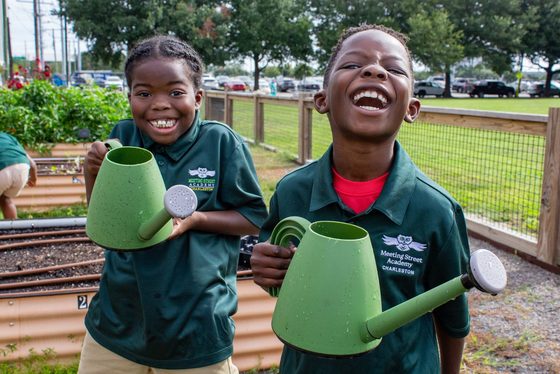
Every October, we’re one of thousands of organizations and schools across the country who celebrate National Farm to School Month. It’s a time for folks to take a moment and shine light on exciting work happening across the country and remember the importance of food education, school gardens and connecting students with healthy, fresh, local produce.
For us, October is a great excuse to join in on the celebration but the truth is, the spirit of Farm to School Month is what drives us every single day of the year: the belief that farm to school can empower children and their families to make informed food choices and contribute to more vibrant communities.
Creating Thriving Communities: Local Food in Every School
This year’s celebration centers around the theme “Creating Thriving Communities: Local Food in Every School”, and that idea hits right at home for us. Farm to school has always been about so much more than just what ends up on a lunch tray. When students and schools connect with local producers, it opens up important opportunities for small and mid-sized farmers. At a time when many independent growers are working around the clock just to stay afloat, these partnerships offer a real lifeline to keep local agricultural traditions alive.
For the National Farm to School Network the dream is to “see local food in every school, nationwide” and we’re excited to be playing a role in this effort here in Charleston.
Our work centers on getting fresh produce directly into the hands (and mouths) of our students, and our roots in connecting students to local food runs deep. Since our founding, we’ve worked to bring garden-based education to students throughout Charleston and get local produce into the places that people are eating food, like students’ homes and school cafeterias. And our work goes beyond just schools, we also work to get fresh local produce to the broader community through initiatives like our Urban Farm at Enston Home and our seasonal Farm Stand.
It’s all part of the same mission: making sure fresh, locally grown food is accessible to everyone.
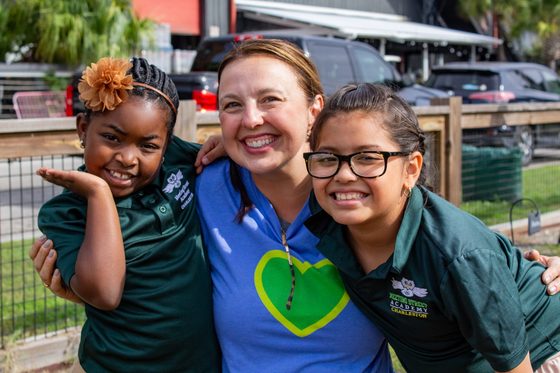
Farm to School in Action at Green Heart
If you’re familiar with our work, you know that the heart of what we do happens in our school garden spaces. There’s nothing quite like watching a student’s awe as they watch the seed they planted start to sprout. Or the excitement as a student pulls a carrot out of the ground, rinses it off, and takes a bite right then and there.
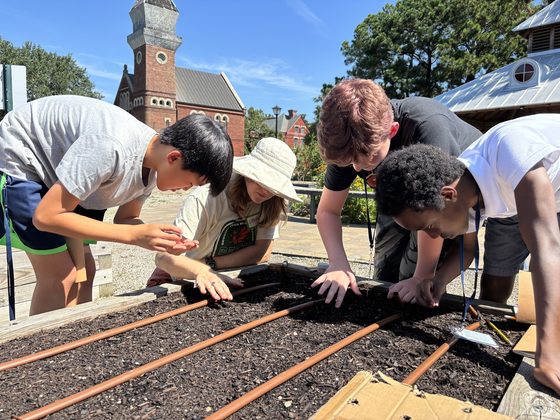
A Few of Our Favorite Lessons
To give you a window into what our farm to school efforts look like in action, we asked a few members of our team to share their favorite hands-on lessons that bring produce from seed to our students.
Pickling
Favorite lesson of Lilli Paige G., Garden Educator
“Our pickling lesson is definitely one of my favorites! It takes place midway through the fall semester and marks an exciting milestone for our students as their seeds have grown into mature plants, and their crops are finally ready to harvest! Since the beginning of the school year students have taken part in every stage of the planting and growing process and the pickling lesson gives them a chance to finally eat what they planted.
In the lesson, we learn about the technology of pickling and how it has been used as a method to preserve edible plants for thousands of years. Then we do the pickling process by putting our harvested root crops, such as carrots and radishes, into a brine that the students mix up including their favorite spices. As an added bonus, our middle school students also design their own labels for their pickles. Commercials and all!
This lesson combines creativity, history, and science in a hands-on way that shows them what “seed to table” truly means. As an educator, watching the students be a part of such a long process that is invisible to most of us is inspiring to me and the students alike.”
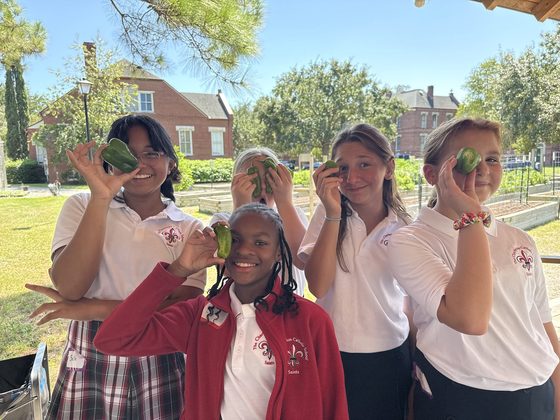
Compost FBI’s
Favorite lesson of Lilly S., Garden Educator
“One of my favorite lessons to teach is “Compost FBIs”! There is nothing quite like watching students’ eyes light up when they learn that nature has its own team of “chefs” (our FBIs, which stands for fungi, bacteria, and invertebrates) working non-stop to turn food waste into a super-snack soil for our plants.
During the lesson, students hunt for earthworms and other compost critters, feel the warmth generated by busy bacteria, and use magnifying glasses to look for signs of beneficial fungi. My students come to understand the difference between dirt and food waste and how nature’s way of recycling keeps unnecessary waste out of landfills while feeding our garden beds.
The highlight, as always, is bringing the concept full circle to our plates: connecting the “F” in our FBIs to a delicious, taste-test of sautéed mushrooms! Seeing students tentatively get their taste test, bravely taste it, and then often ending up loving it, sautéed mushrooms is an exciting reminder of how farm to school programs can introduce our students to new foods and encourage them to be brave and try something new!”
Growing Together: Respect in the Garden
Favorite lesson of Allie A., Green Heart Buddy
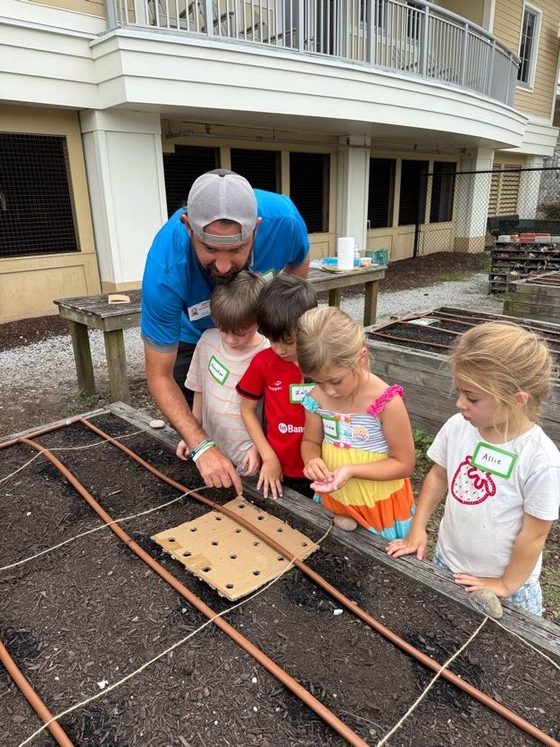
“One of my favorite lessons is actually the first one that we do during the fall semester! It’s the first time we get to engage with a new group of students, and the energy and excitement of students being in the garden for the first time is palpable.
In this lesson, students discuss what it means to practice respect—for themselves, their buddies, and the earth—and they plant seeds for fall crops including carrots, beets, radishes, and turnips. It sets a foundation for the rest of the semester and kicks off the fall growing season, giving students a chance to grow something all the way through from seed to harvest!
This year, my small group of students planted beet seeds and we take a chance each week during our lesson to see how they’re coming along. As of last week, we have about 10 beet plants that are growing strong with robust leaves and the very beginnings of the beet root taking shape.
This past week in our program, we also got to taste test a turnip that other students in our class planted when we planted our beets. The excitement was all there to finally get to eat something that our classmates grew!”
Planting for Future Generations
Favorite lesson of Jesse B., Executive Director
“My favorite lessons are when students plant a crop that they will not harvest themselves, but will leave for another class to harvest. This is usually done in the Fall with crops like potatoes, collards, kale, and broccoli, to be harvested in the Spring.
This is a great lesson for students, that they will reap some of their harvest, especially with crops that mature quickly like lettuce or radishes. But, some of our best work happens when we are working towards a goal that we won’t realize ourselves, but the next generation will. That kind of forward-oriented thinking across generations I think is a lesson we could all learn from.”
A Reflection on Our Celebration and Gratitude
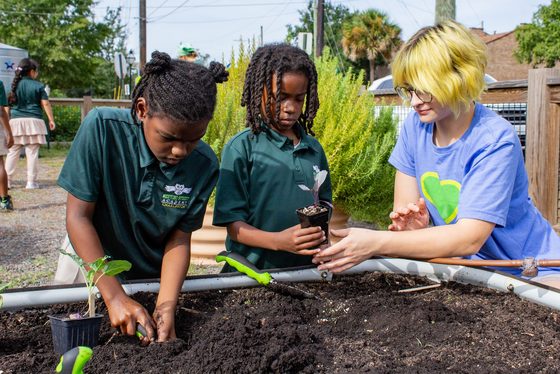
Our team never takes for granted that we get to work on farm to school efforts day in and day out. We get a front-row seat to moments of curiosity, discovery, and joy that are sparked by students getting the opportunity to connect with local food.
But none of our work happens in a vacuum. It truly takes an entire community to keep our gardens growing—our dedicated educators, passionate volunteers, school partners, community partners, local food growers, and generous supporters. We want to take a moment in this month of celebration to celebrate everyone who makes our work possible and express our sincerest Green Heart gratitude. Thank you for growing with us!
If you’d like to keep the spirit of Farm to School Month going with us, we’d love to have you in our corner! You can join us in person to volunteer at the Urban Farm at Enston Home or make a donation to support our work delivering fresh produce and farm to school education in the Charleston area.
Posted by Buddy Greenheart
On October 21, 2026
In Education, School Gardens
Comments on this post