Introducing the Just Garden at Mitchell Playground
For 13 years, our urban farm at Mitchell Playground in Downtown Charleston served as an important part of the school garden for our flagship farm to school program at Mitchell Elementary. It was a staple of our operation at Mitchell—growing fresh food, hosting countless farm to school lessons with Mitchell students, and being a staple attraction at our annual Harvest Dinner events.
But as the saying goes, all good things must come to an end. As Mitchell Elementary closed its doors at the end of last school year and Simmons-Pinckney Middle School took over the school building, it was also time for the Mitchell Urban Farm to find a new purpose.
New Partnerships and A New Beginning
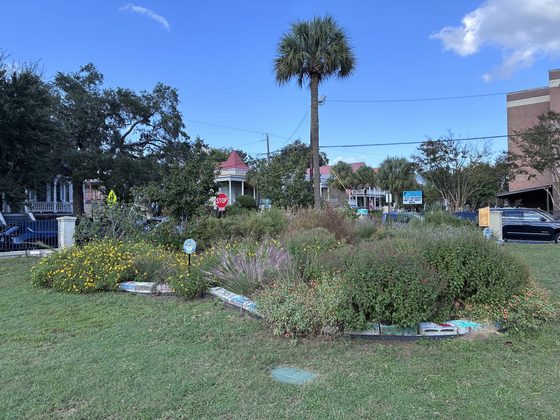
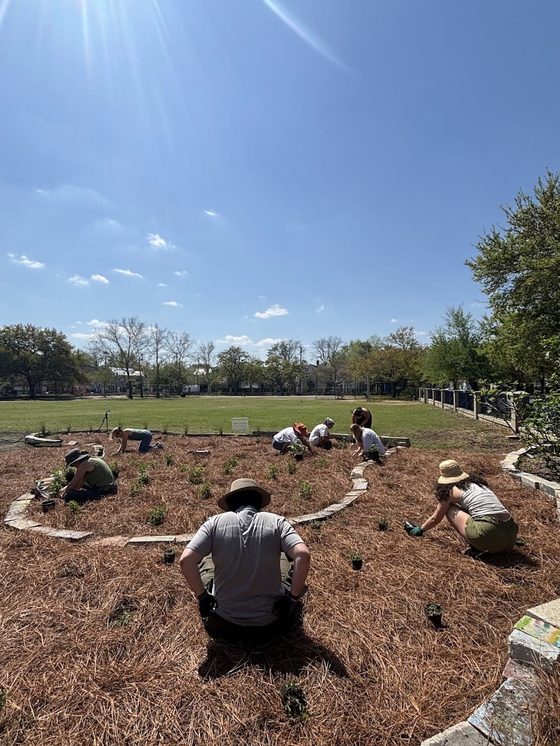
Now not to throw in another tacky phrase, but as one door closes another door opens and this past March, that’s exactly what we did at the old urban farm at Mitchell Elementary. We worked in partnership with The M.A.R.S.H. Project and Sharleen Johnson of Native Plants to the People, LLC, to reimagine and transform the old farm plot into the Just Garden at Mitchell Playground, a thriving, native pollinator habitat.
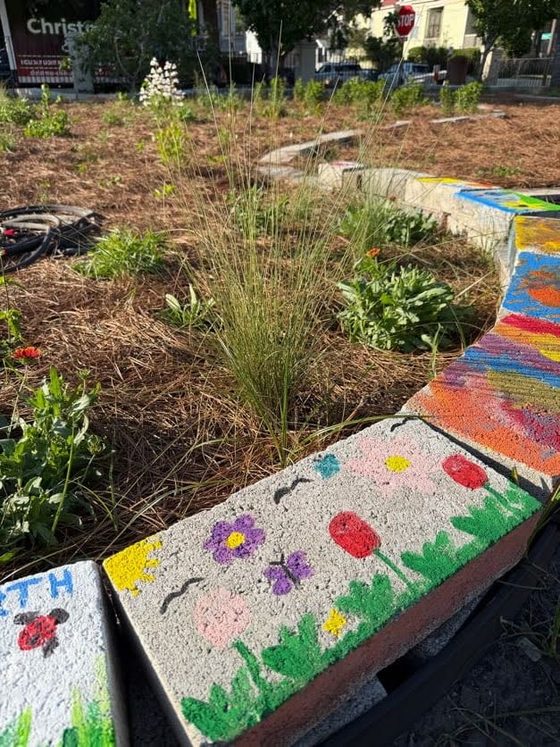
The garden goes far beyond just being a pretty patch of wildflowers and serves as a living classroom and an urban wildlife sanctuary that has already exceeded our expectations in its very first growing season. It was also designed with year-round structure, winter interest, and stormwater infiltration in mind.
Thoughtful Design for Every Season
To ensure the garden supports local wildlife from early spring through the winter months, Sharleen Johnson designed a layered planting plan tailored to our local coastal climate. Rather than relying on single-season blooms, the garden features intentional swathes and mixes of South Carolina native species:
- Year-Round Structure & Grasses: Sweetgrass (Muhlenbergia capillaris), Virginia Sweetspire, and Leavenworth Sedge provide texture, winter shelter, and stormwater absorption.
- Long-Blooming Pollinator Magnets: Vibrant patches of Turk’s Cap Hibiscus, Scarlet Sage, Blanket Flower, and Dune Sunflower offer continuous nectar from late spring until the first frost.
- Host Plants & Native Perennials: Species like Partridge Pea, Frost Aster, Elliott’s Aster, Spotted Beebalm, and Clustered Mountain Mint serve as critical larval host plants for native butterflies and moths, while providing rich pollen for specialist bees.
- Resilient Groundcovers: Low-growing Frogfruit and Lyre-Leaf Sage border the water access and foot-traffic areas, standing up to salt, drought, and wet feet while welcoming passing butterflies.
A Habitat For Local Pollinators
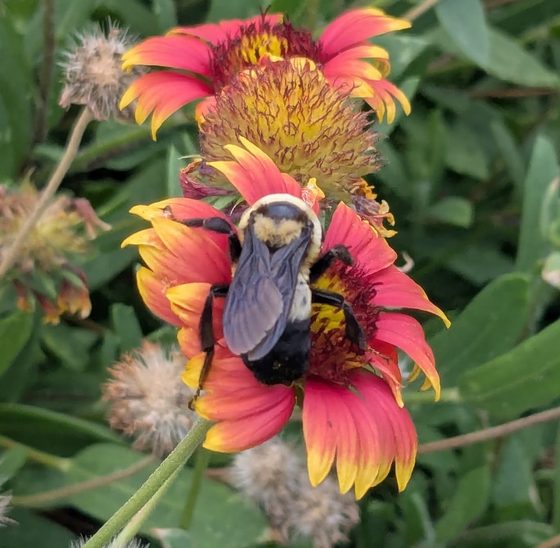
Beyond the plants in the garden, the garden’s ecosystem has flourished and the ecological response to the Just Garden has been nothing short of remarkable. On sunny summer days at peak bloom, hundreds of individual pollinators can be seen foraging across the space.
Sharleen has been keeping tabs of garden activity and, through her photo documentation on iNaturalist, she has already recorded an impressive array of visitors:
- 22 species of bees and pollinating wasps, including the Southern Plains Bumble Bee and the American Bumble Bee that are currently under federal review for Endangered Species Act protection. Even more fascinating, dozens of male bees have been using the garden not just as a feeding ground, but as a place to spend the night.
- A thriving web of beneficial insects, including multiple species of dragonflies, two species of assassin bugs, mealybug destroyers, and long-legged flies that naturally keep garden pests like aphids and scarab beetle grubs in check.
- Visiting birds, including hummingbirds sipping nectar from the Turk’s Cap Hibiscus and migratory warblers flitting through the Frost Aster.
Growing Community and Student Connections
Beyond the wildlife, the Just Garden has also quickly become a point of pride and curiosity for the neighborhood. Neighbors walking their dogs, parents with young children, and passersby regularly stop to admire the blooms and share positive feedback.
In September, the garden even served as a featured urban habitat stop on a field trip for the state-wide South Carolina Native Plant Society Symposium, and its seeds are already being harvested to share at local community resilience events.
Looking ahead, we are excited to deepen student engagement with the Just Garden. With its location right across the street from Simmons-Pinckney Middle School, this native plant sanctuary serves as a natural complement to the school’s vegetable beds—giving students the opportunity to see firsthand how native ecosystems, pollinators, and food production work hand-in-hand.
Come See Us
If you find yourself near 145 Fishburne Street in Downtown Charleston, we invite you to stop by Mitchell Playground, take a look over the fence, and see who is buzzing around!
Posted by Buddy Greenheart
On November 18, 2026
In Announcements, School Gardens
Comments on this post